
Associação Portuguesa de Investigação em Cancro
Dual immune evasion mechanism shapes MMR-deficient colorectal tumors
Dual immune evasion mechanism shapes MMR-deficient colorectal tumors
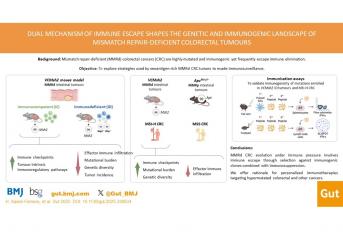
A team of researchers from the Institute for Research and Innovation in Health (i3S) at the University of Porto has identified persistent vulnerabilities in colorectal tumors that could be exploited to develop personalized therapeutic cancer vaccines. The study, published in the journal Gut, shows that although these tumors can evade immune surveillance, they retain neoantigens capable of eliciting an effective immune response.
According to José Carlos Machado, the tumor creates an immunosuppressive microenvironment that prevents the immune system from eliminating cancer cells, while preserving their potential to be recognized by immune cells. The identification of these immunogenic neoantigens provides a strong foundation for the development of personalized vaccines tailored to the genetic profile of each patient's tumor.
These findings contribute to a better understanding of how cancer evolves under immune pressure and further support the potential of personalized immunotherapies as a promising strategy for the treatment of colorectal cancer.
Helena Xavier-Ferreira(1,2), Ana Vilarinho(1,3), Bruno Cavadas(1), José L. Costa(1,3), Fátima Carneiro(1,3), Bauke Ylstra(4), Noel de Miranda(5), Carlos Resende(1), José C. Machado(1,3)
1- i3S Instituto de Investigação e Inovação em Saúde, University of Porto; Porto, Portugal
2- ICBAS School of Medicine and Biomedical Sciences, University of Porto, Porto, Portugal
3- Faculty of Medicine, University of Porto, Porto, Portugal
4- Department of Pathology, Cancer Center Amsterdam, Amsterdam UMC, Vrije Universiteit Amsterdam, Amsterdam, The Netherlands
5- Department of Pathology, Leiden University Medical Center, Leiden, the Netherlands
Background: Mismatch repair-deficient (MMRd) colorectal cancers (CRCs) are highly mutated and immunogenic yet frequently escape immune elimination. Objective: To define how host immunity shapes the genomic architecture and tumour microenvironment of MMRd CRC. Design: We used a genetically engineered mouse model of MMRd CRC to compare tumour development in immunocompetent and immunodeficient hosts. Tumours were characterised for microenvironment composition, immunoregulatory pathways, mutational burden and genetic diversity. Immunogenicity of selected mutations was tested and findings were validated in human samples. Results: In immunocompetent hosts, immune pressure reduces tumour incidence through selective elimination of early neoplastic clones bearing immunogenic mutations, consistent with antigen-specific immunoediting. Tumours exhibit a suppressive microenvironment with reduced cytotoxic lymphocytes and elevated immune checkpoint proteins. Tumours from immunodeficient mice showed higher mutational burden, greater genetic diversity and enrichment of mutations absent in immunocompetent animals, several of which encode neoantigens that elicit CD8+ T cell responses. Analyses of human CRCs with high microsatellite instability (MSI-H) confirmed retention of the same immunogenic mutations, elevated mutational burden, reduced effector immune infiltration and expression of immune checkpoint proteins. These results support a dual mechanism of immune escape, immunoediting and local immunosuppression, allowing MMRd CRC tumours to persist despite immune recognition. Conclusion: We show that immunosurveillance plays a dual role in constraining tumour development and sculpting the genetic and immunological landscapes of MMRd tumours. This evasion strategy explains the paradox of immune-rich yet progressive MMRd tumours and highlights vulnerabilities that could be exploited by neoantigen-based or immune reactivation therapies.
Gut
https://gut.bmj.com/content/early/2026/06/16/gutjnl-2025-336834